
By Owen Newman
Here is a contract maintenance checklist built around the same idea as my last post: the wall is strongest when both parties show up and walk it together. From project kick-off to senior leadership check-ins, the checklist provides jumping-off points for developing agendas and guiding purposeful communication between owners and contractors together.
Joint Considerations
This checklist is intended to stimulate deliberate thought and discussion — not to provide a one-size-fits-all approach. In reviewing each section, the parties should develop a joint agenda that reflects the unique aspects of their project and contract. The key to success is transparency, purposeful communication, and joint ownership of project success. There should be an agreed approach that notice provisions, documentation requirements, and similar contractual obligations are not “gotcha” opportunities to avoid claims or owner directives. They are fundamental requirements to ensure timely and transparent communication. It is in everyone’s interest that notice timelines, documentation requirements, and other contractual prerequisites are understood, agreed, and complied with during execution of the project. Not every meeting listed below will be required on every project. But by identifying those that are most relevant and putting them on the calendar from the outset, the parties are far more likely to hold them once the project is underway.
A Note on Documentation
Document any understandings or agreements reached during the meetings described below. Be mindful that informal documentation does not inadvertently alter the contract. Any deviation from the contract’s requirements must be formally documented in accordance with the contract’s amendment and change order provisions.
The Role of In-House Counsel
On many projects, meetings like those described below occur among project teams without guidance or participation from in-house legal. In-house counsel, however, has valuable insight into what types of issues have caused disputes in the past and what engagement practices have helped or hurt. Some ways in-house counsel can add value without signaling escalation include limiting involvement to reviewing and providing input into agendas and meeting minutes or establishing from the outset — at the kick-off meeting if possible — that they will be attending as a matter of course. Building non-adversarial relationships is the most critical component towards avoiding unnecessary escalation.
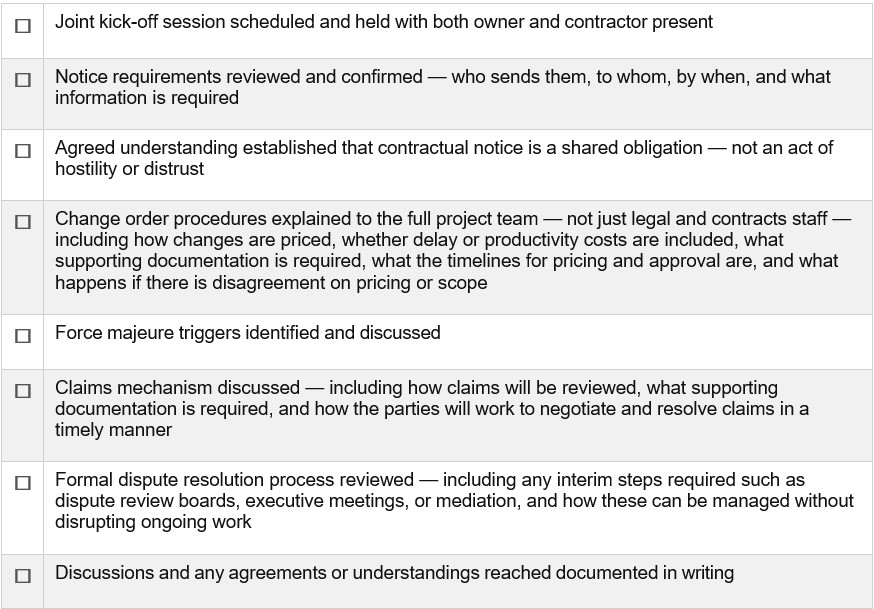
The Kick-Off Meeting
Include a review of key contract provisions and discuss areas that frequently give rise to disputes: change order procedures, force majeure, and dispute resolution mechanisms. Address not only the substance of the contract but how the parties will manage and coordinate their responsibilities throughout the project. Use this as an opportunity to emphasize that honoring notice provisions, providing change requests, or even filing claims are purely contractual actions — agreed to by both parties — they are not acts of hostility.
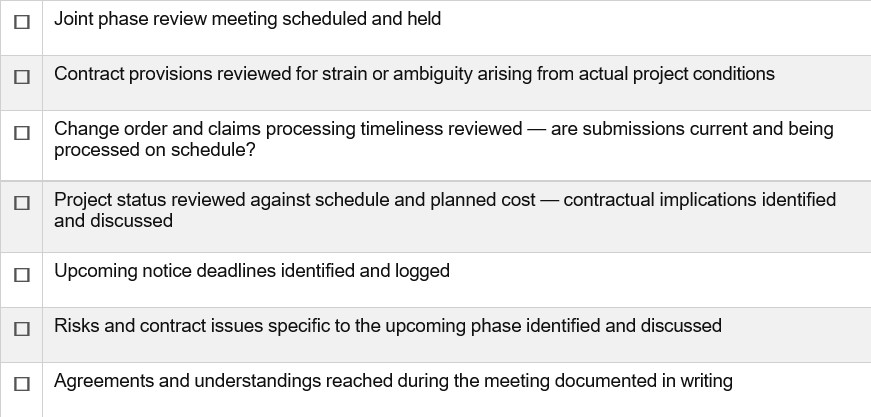
At the Start of Every Major Project Phase
At the start of each new phase — mobilization, civil, mechanical, commissioning — schedule a structured joint review to ask: Where are we against the contract? What is working and what needs attention? What new risks may arise in the next phase, and how can the parties prepare for them?
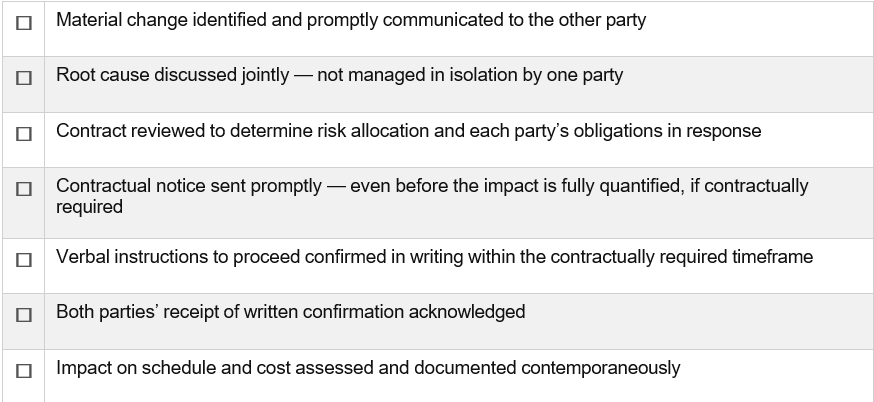
When Circumstances Change Materially
Upon the occurrence of a significant or material change in circumstances — a design revision, force majeure event, tariff announcement, or schedule delay — both parties should convene promptly to determine who bears the risk under the contract and what each party must do, and by when, to preserve their rights.
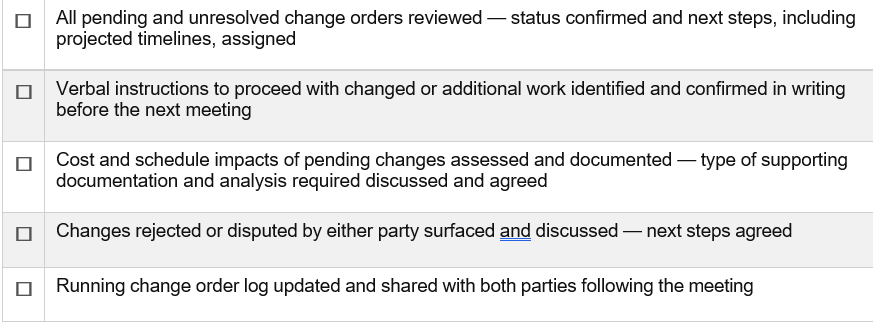
Routine Change Management Discussions
Treat the change order process as a shared legal obligation and schedule routine meetings to review and resolve change orders contemporaneously. Change management should happen on a schedule — not only when a dispute has already developed.
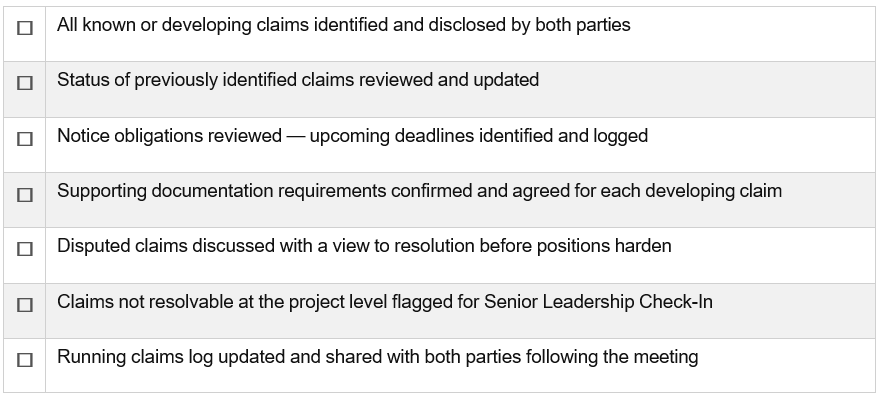
Routine Claims Review Meetings
Claims review meetings are critical to managing the extent and severity of disputes. The goals are transparency, contemporaneous resolution, and the elimination of surprises.
Senior Leadership Check-Ins
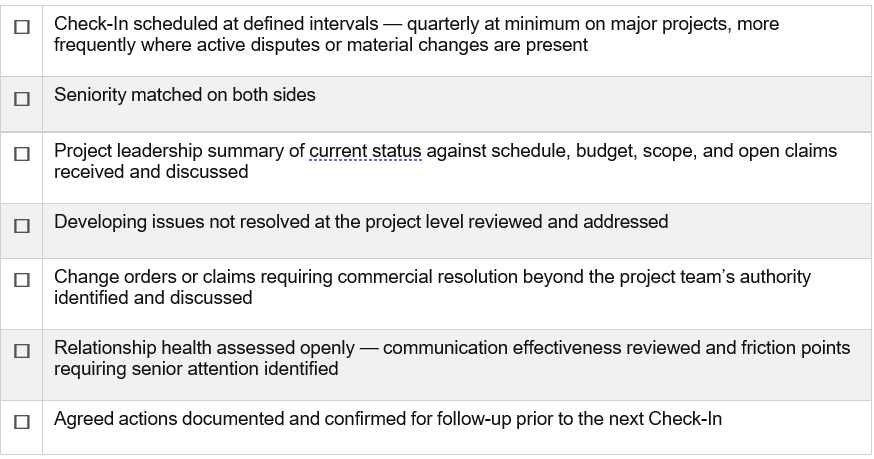
Senior Leadership Check-Ins are a relationship and alignment mechanism — not a crisis response. The goal is for senior leadership on both sides to meet at planned intervals throughout the project, before issues require escalation.
The goal is not perfection. It is the discipline of showing up and working the line together.