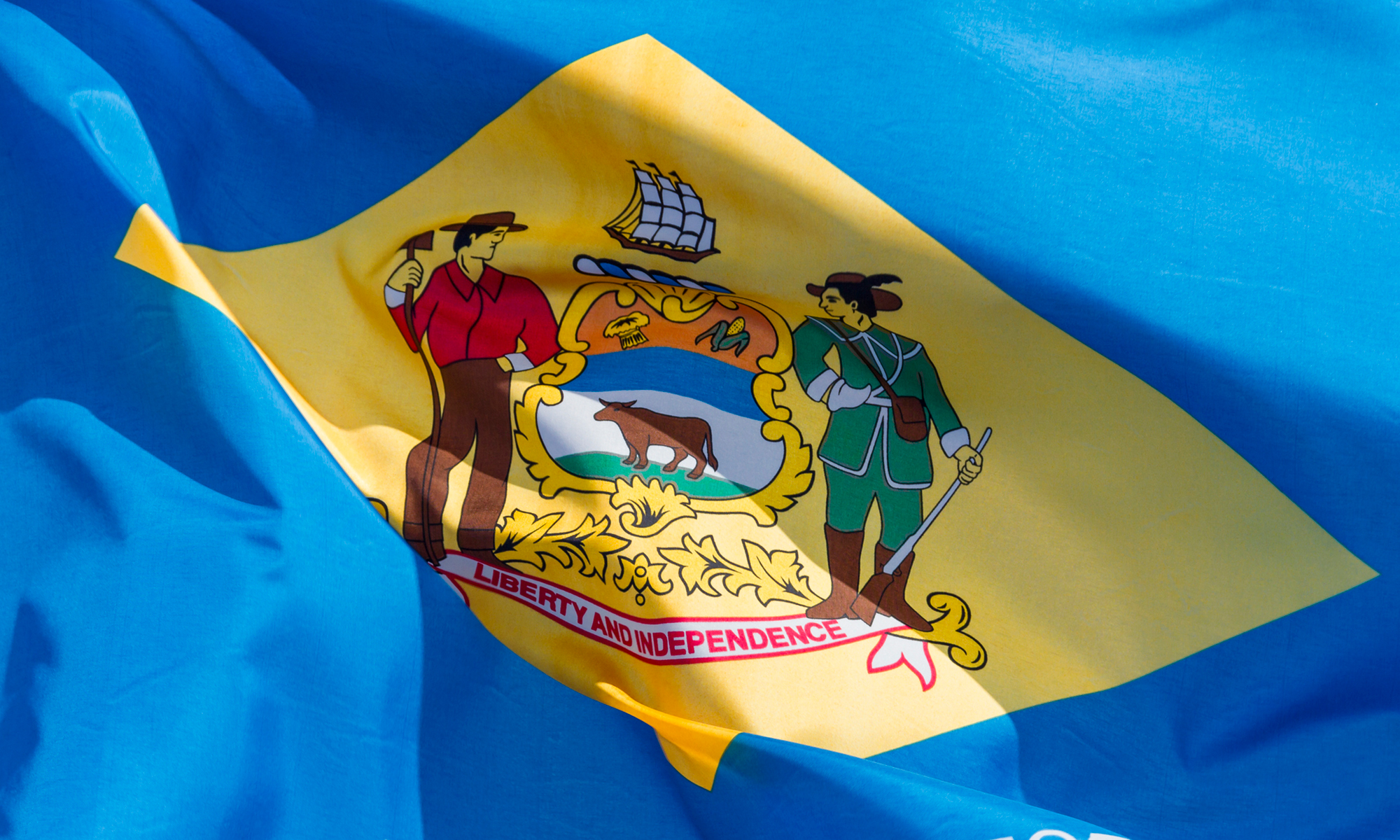
In a decision authored by Vice Chancellor Cook, Masimo Corp. v. Kiani, C.A. No. 2024-1086-NAC, the Delaware Court of Chancery has ruled that a corporation’s allegations of breach of fiduciary duty against its founder-CEO must be heard in California courts. The decision holds that a forum selection clause in a contract between the corporation and its founder-CEO selecting California’s courts to the exclusion of Delaware’s own is enforceable, reasoning that amendments to the Delaware General Corporation Law (“DGCL”) enacted in 2024 override several widely-cited prior precedential court rulings to the contrary.
Corporations take their rules for internal governance from the state under whose laws they are formed, supplemented by the corporation’s certificate of incorporation (commonly called the “Charter”) and its Bylaws. For Delaware corporations, these sources — the DGCL, Charter, and Bylaws — are treated as a hierarchy. The Bylaws must be consistent with the Charter, which must be consistent with the DGCL.
To avoid overly constraining private parties’ commercial relations, the DGCL generally has a light touch. Most DGCL provisions are treated as “default” rules that the Charter can supersede — the words “unless otherwise provided in the certificate of incorporation” occur with frequency throughout the DGCL. Few substantive rules are so-called “mandatory” provisions that the Charter cannot contradict. One of those rare mandatory provisions is Section 115‘s restriction that, whatever choice of forum for litigation a corporate Charter and Bylaws may select, Delaware courts must be included as a permissible place to bring fiduciary claims.
But, the Delaware General Assembly amended the DGCL in 2024. These amendments, which we have written about previously included a new Section 122(18) allowing a corporation to enter into contracts with “current or prospective stockholders. . . in its or their capacity as such” that contain governance rules which ordinarily would appear in the Charter or Bylaws. Like the Charter and Bylaws, Section 122(18) provides that these agreements cannot vary the DGCL’s mandatory provisions, but that limitation has an exception: “other than § 115.”
Kiani involved a health technology and consumer electronics company founded in 1989, and which has been publicly traded on the NASDAQ exchange since 2007. Since 2015, its founder-CEO has had a series of agreements with the company, the provisions of which include a severance payment if he is ousted and certain conditions are met. These agreements also provide for California courts as an exclusive forum. After proxy contests resulted in the election of an independent board majority, the founder-CEO resigned and sued in California, alleging the election and his resignation triggered the severance payment provisions. The corporation, under the direction of the independent board, sued in Delaware alleging that the agreements were so favorable to the founder-CEO as to have been the product of breaches of fiduciary duty, and so cannot be enforced. The CEO moved to dismiss the Delaware case based on the California forum selection clause.
The Court noted that, prior to the 2024 amendments, numerous Delaware cases refused to allow a contract’s choice of forum to control a fiduciary claim, since fiduciary duties arise from a source independent of the contract. In the Court’s view, Section 115 was enacted in 2015 in part as a legislative codification of this policy view. But, the Court opined that since that time numerous decisions have emphasized that in Delaware “freedom of contract outweighs countervailing public policy concerns.” Just as Section 115 codified the prior policy view, Section 122(18) codified the more recent trend. Thus, in the presence of a qualifying stockholder agreement, Section 122(18) with its “other than § 115” exception “legislatively overrides” the earlier decisions. Since the founder-CEO was also acting as a controlling stockholder when the contract was formed, the contracts triggered Section 122(18), and so required dismissal of the Delaware litigation in favor of litigation in California courts.
Kiani is a decision about forum, and does not rule on the substance of the corporation’s allegation that the contract was the product of self-dealing breaches of fiduciary duty. That will be decided in California’s courts, applying Delaware fiduciary law. While the move from a Delaware courtroom to a California one is comparatively modest, the Kiani opinion repeatedly notes that the legislatively-overridden cases also address arbitration clauses, a potentially more significant type of forum change. The 2024 DGCL amendments that added Section 122(18) are still quite new, and the full implications of the amendments’ provisions, including whether and to what degree fiduciary claims can be forced into private arbitration, remain to be explored in future cases.