Assume you’re in federal court and you decide you need to petition the 9th Circuit for a discretionary interlocutory appeal of some sort. For example, this could be a petition under Federal Rules of Civil Procedure rule 23(f) to appeal an order granting or denying class-action certification. Federal Rules of Appellate Procedure rule 5 sets forth the procedures governing such an “Appeal by Permission.”
Here we are again for that classic showdown: Blue versus Yellow. To set the stage, recall Rule 1.200 (Format of Citations), which states: “Citations to cases and other authorities in all documents filed in the courts must be in the style established by either the California Style Manual [commonly called the Yellowbook] or The Bluebook: A Uniform System of Citation, at the option of the party filing the document. The same style must be used consistently throughout the document.” How to choose? Let’s let the guides duke it out for themselves in gunslinger style. They square off at high noon at the mesa of authorities in a small opening brief somewhere in the Golden State….
If you google “How long to appeal arbitration order in California,” the AI Overview response looks something like this: “For court orders denying a petition to compel arbitration, you typically have 20 days to file a notice of appeal.” Using a more grammatical phrasing, if you google “How long does one have to appeal an arbitration order in California,” the result again is something like this: “Key deadlines for arbitration appeals in California: Denial of Motion to Compel Arbitration: 20 days to appeal an order dismissing or denying a petition to compel arbitration.” Similarly, googling “How long does one have to appeal an order denying arbitration order in California,” the AI Overview answer looks something like this: “In California, a notice of appeal regarding an order denying a petition to compel arbitration must typically be filed within 20 days after the superior court clerk or a party serves a ‘Notice of Entry’ of the order or a file-endorsed copy of the order.” (Note that googling these various queries, even verbatim, often returns slightly different phrasings.)
Appellate mediation is widespread and has been a hot topic for ages now. Alternative dispute resolution, or ADR, providers expressly tout their appellate mediation programs (e.g., ADR Services, JAMS). Most California Court of Appeal districts have formal mediation programs: e.g., the 2nd District’s Mediation Program, the 3rd District’s Mediation Program, the 4th District’s Civil Mediation Program, the 5th District’s Mediation Program, and the 6th District’s Mediation Program. So do many federal Courts of Appeals. The 9th Circuit’s Mediation Program has been around for over 30 years and currently has a team of seven Circuit Mediators. Bucking the ubiquitous banal naming convention, the 2nd Circuit may send you to CAMP (its Civil Appeals Mediation Program). The ABA even published a 366-page treatise “Appellate Mediation: A Guidebook for Attorneys and Mediators” (ABA 2016) by California’s own Brendon Ishikawa and Dana Curtis (a former 9th Circuit Mediator). Yes, so very much can and has been said about appellate mediation. But what about appellate meditation?
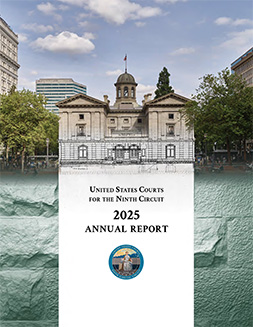
The Chief Judge’s summary message notes that the Ninth Circuit “continued to be the nation’s busiest federal appellate court, accounting for 22.8% of all new appeals nationally, with 9,544 appeals, up 17.2% from fiscal year 2024.” In 2025, the Circuit added one new judge (Eric C. Tung) and saw the passing of two senior judges (Andrew Kleinfeld and Sandra Ikuta). The median time for an appeal to be on the docket at the court was 11.9 months (down .8 months from 2024) , with the median time for briefing at 6.7 months and the median time from oral argument to opinion at 1.4 months. Ruling on 730 petitions for rehearing en banc, only 30 made it to a vote, and the court granted only 11 (the same number as in 2024). See p. 56.
Sometimes the strongest litigation strategy is staying silent—strategically choosing not to respond to weak, irrelevant, or low-impact arguments can conserve client resources, preserve credibility, and let lawyers exercise independent judgment without undermining the case.
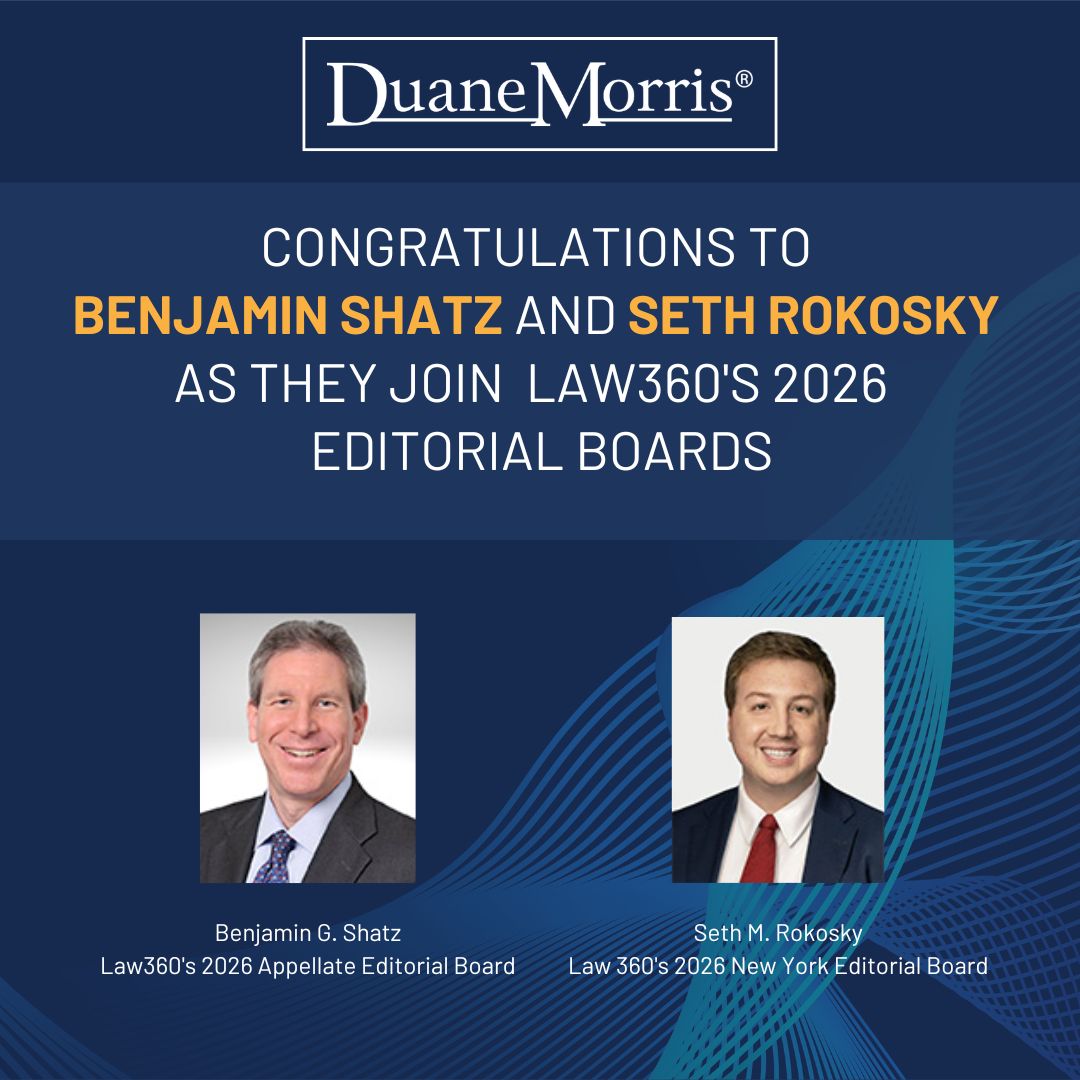
Duane Morris Partners Benjamin Shatz and Seth Rokowsky have been named to Law360 2026 Editorial Advisory Boards. Benjamin was named to the publication’s Appellate Editorial Board. Seth was named to the New York Editorial Board.