
Robert M. Palumbos Appointed Co-Chair of the Philadelphia Bar Association Appellate Courts Committee

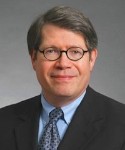
Rob PalumbosDuane Morris partner Robert M. Palumbos has been appointed co-chair of the Philadelphia Bar Association’s Appellate Courts Committee.  Mr. Palumbos’ practice includes appellate and commercial litigation, and his appellate work covers a wide range of legal areas, such as RICO, corporate governance, administrative agency law, real estate and insurance coverage.

Mr. Palumbos is also vice chair of the Pennsylvania Supreme Court’s Appellate Court Procedural Rules Committee.

First Circuit Rejects Seventh Circuit’s Approach to Rejection of Trademark Licenses: Licensees Retain No Post-Rejection Trademark Rights

In one of the first decisions issued this year by the United States Court of Appeals for the First Circuit, the court addressed an issue of first impression. In Mission Products Holdings, Inc. v. Tempnology, LLC, n/k/a Old Cold LLC, the First Circuit held that the omission of trademarks from the definition of “intellectual property” in Section 101(35A) of the Bankruptcy Code, as incorporated by Section 365(n), leaves a trademark licensee with nothing more than a claim for damages upon the rejection of its license under Section 365(a). In so holding, the First Circuit joined the majority of bankruptcy courts that have addressed the issue and rejected the view adopted by the United States Court of Appeals for the Seventh Circuit.

To read the full text of this Alert, please visit the Duane Morris website.

Supreme Court to Review Sales Tax Physical Presence Standard; More States Pass Reporting Laws on Remote Sellers

The Supreme Court of the United States has accepted for review the case of South Dakota v. WayfairInc., et al, in which the state of South Dakota has challenged the continued viability of its 1992 Quill Corp. v. North Dakota decision that required some physical presence of a remote seller in a state before a state could impose its sales tax collection obligations on the seller. The Supreme Court in 1992 held it was up to Congress to change the test. In this new case, the South Dakota Supreme Court held that South Dakota’s attempt to legislatively override Quill was in violation of the law. By hearing the case, the U.S. Supreme Court will now decide whether to change the law or continue to allow the physical presence standard to stand, until and unless the Congress decides to change it. This decision could have far-reaching effects on interstate commerce, especially impacting internet sellers.

To read the full text of this Alert, please visit the Duane Morris website.

Ninth Circuit Concludes Cosmetology Students Are Not Employees of School

On December 18, 2017, the Ninth Circuit held in Benjamin v. B&H Education, Inc., F.3d, No. 15-17147, 2017 WL 6460087, that cosmetology students were not employees of their schools. In doing so, the Ninth Circuit joined the Second and Eleventh Circuits in adopting the primary beneficiary test to determine whether students are employees. The Benjamin case was the first to reach a decision from the Ninth Circuit and joined many other jurisdictions that had previously dismissed virtually identical cases (including a recent affirmance of summary judgment by the U.S. Court of Appeals for the Seventh Circuit).

The Benjamin plaintiffs were former students who alleged that under federal, California and Nevada law, they should have been paid wages as employees for the time they spent practicing skills in the schools’ clinic classroom and performing concierge duties (e.g., cleaning, sanitizing, greeting clients, recommending hair products, etc.). U.S. District Judge Vince Chhabria for the Northern District of California granted summary judgment for the school, holding that “Plaintiffs were not employees under federal or state law because Plaintiffs were the primary beneficiaries of the educational program and they had not shown that [the cosmetology school] subordinated the educational function of its clinics to its own profit-making purposes.” [Note: Duane Morris represented B&H Education in this case in the Northern District of California.]

To read the full text of this Alert, please visit the Duane Morris website.

Pennsylvania Superior Court Confirms that Fair Share Act Applies in Asbestos and Other Strict-Liability Cases and Requires Apportionment of Liability Among Defendants and Settled Tortfeasors Regardless of Bankruptcy Status

In Roverano v. John Crane, Inc., 2017 PA Super 415 (Dec. 28, 2017), the Pennsylvania Superior Court confirmed that Pennsylvania’s Fair Share Act, which prescribes how liability is allocated among multiple defendants, applies to strict-liability personal injury claims arising from asbestos exposure. [Note: Duane Morris was retained as appellate counsel and briefed and argued the appeal for one of the prevailing parties.] This is an important result for defendants in asbestos and products liability litigation throughout Pennsylvania.

To read the full text of this Alert, please visit the Duane Morris LLP website.


Duane Morris Partner Paul Killion to Present at California State Bar’s Inaugural Appellate Summit

Duane Morris’ San Francisco partner Paul Killion will be speaking October 14, 2017, at the inaugural Appellate Summit organized by the newly reconstituted California State Bar Litigation Section’s Committee on Appellate Courts.

Paul’s panel will address “When Things Go Wrong: Challenges and Strategies for Appeals from Jury Trials.” His co-panelists are California Court of Appeal Justice Kathleen Banke of the First District, Division One, and Syda Cogliati, Senior Appellate Research Attorney for the Sixth District. Paul is an appellate specialist certified by the California Board of Legal Specialization.

Duane Morris is a sponsor of the Appellate Summit.

For more information and to register, visit the California State Bar website.

Duane Morris’ Thomas Newman Recognized as the NYC Appellate “Lawyer of the Year” by Best Lawyers

Duane Morris’ Thomas Newman has been named by Best Lawyers as the “Lawyer of the Year” in New York City Appellate Practice for 2018. The recognition is given to only one attorney for each practice area and city. Lawyers are selected based on high marks received during peer-review assessments conducted by Best Lawyers each year.

Mr. Newman practices in the areas of insurance and reinsurance law, including coverage, claims handling, contract drafting and arbitration and litigation. In addition to his insurance/reinsurance practice, Mr. Newman has wide experience in appellate practice and has handled hundreds of appeals in both state and federal courts in New York and elsewhere and has argued 80 appeals in the New York Court of Appeals.

He is a member of the American Academy of Appellate Lawyers; a life member of the American Law Institute; a Fellow of the Chartered Institute of Arbitrators; a member of the London Court of International Arbitration; a member of the American College of Coverage and Extracontractual Counsel; a member of ARIAS-U.S.; a member of the Federation of Defense and Corporate Counsel; a Fellow of the New York State Bar Association Foundation; and a member of the New York State Office of Court Administration’s Advisory Committee on Civil Practice.

He is the original author of New York Appellate Practice (LexisNexis, 2010), co-author of the Handbook on Insurance Coverage Disputes (Walters Kluwer 17th ed. 2014) and the author of numerous articles on insurance/reinsurance and appellate practice. Mr. Newman is annually listed in Chambers USA: America’s Leading Lawyers for Business, The Best Lawyers in America and New York Super Lawyers, for appellate practice and insurance law.
The Second Circuit Loosens The Reins On Insider Trading Prosecutions

After an intervening decision by the United States Supreme Court last year and a rare rehearing of oral argument in March, the Second Circuit has affirmed the conviction of Matthew Martoma, a former portfolio manager at S.A.C. Capital Advisors. In doing so, the Second Circuit has signaled a substantial shift in insider trading law by reversing course from its 2014 decision, which made prosecuting insider trading cases more difficult.

To read the full text of this article, please visit the Duane Morris White Collar Criminal Law blog.

Seventh Circuit Rules Cosmetology Students Are Not Employees

The Seventh Circuit Court of Appeals recently issued an opinion that supports numerous district court opinions that cosmetology students are not employees. In Hollins v. Regency Corp., ___ F.3d ___, No. 15-3607, 2017 WL 3474266 (7th Cir. Aug. 14, 2017), Chief Judge Diane Wood wrote the opinion of a unanimous panel of the Seventh Circuit affirming the grant of summary judgment against former cosmetology students who alleged they were employees of their cosmetology schools when they 1) were practicing skills on paying members of the public and 2) were performing “menial tasks,” such as sanitation, greeting guests and selling products. The Northern District of Illinois had granted summary judgment against the students, and this appeal followed.

Please visit the Duane Morris LLP website to read the full text of this Alert.

Third Circuit: First Amendment Protects Those Recording Police in Public

Is the recording of police carrying out their official duties in public places protected by the First Amendment? Recently, in a case with implications for news organizations as well as citizen-observers, a federal court judge dismissed the First Amendment claims of two citizens against police officers who disrupted, inspected, restrained and/or cited them while they were recording police officers operating in public. In Richard Fields v. City of Philadelphia, 16-1650, 2017 WL 2884391 (3d Cir. July 7, 2017), the U.S. Court of Appeals for the Third Circuit reversed, holding that the First Amendment protects this activity.

To read the full text of this Alert, please visit the Duane Morris website.

© 2009- Duane Morris LLP. Duane Morris is a registered service mark of Duane Morris LLP.

The opinions expressed on this blog are those of the author and are not to be construed as legal advice.

Proudly powered by WordPress