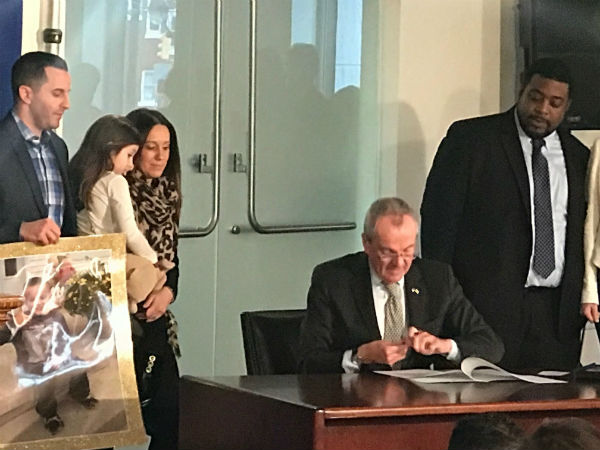
In his first budget address, New Jersey Governor Phil Murphy today reaffirmed his commitment to promptly expand the state’s currently moribund medical marijuana program, and the full legalization of adult use marijuana by January 1, 2019.
In his address, Governor Murphy explained:
We must also make sure we are investing not just in individuals, but also in entire communities – particularly our long-overlooked urban neighborhoods. We must recommit to opening the doors to economic opportunity for the thousands of young men and women – especially young men and women of color – jailed for non-violent drug-related offenses. Our current system has failed them, and put a mark on them that they will carry for their entire lives, preventing them from furthering their educations or getting jobs.
It’s the principal reason I advocate for legalizing adult-use marijuana. According to research, New Jersey spends upwards of $140 million per year adjudicating low-level marijuana possession offenses. And, marijuana-related arrest rates are tilted three-to-one against African-Americans, even though rates of marijuana use are similar among races.
These resources must have a better use, whether to tackle the trafficking of illegal guns, provide stronger community policing, or to crack the back of our opioid epidemic, which was devastating our urban centers long before it made headlines.
I greatly respect those in this chamber who have proposed decriminalizing possession of small amounts of marijuana, and I thank them for recognizing the importance of doing what’s right and just for those who carry criminal records for past possession arrests. But decriminalization alone will not put the corner dealer out of business, it will not help us protect our kids, and it will not end the racial disparities we see.
If these are our goals – as they must be – then the only sensible option is the careful legalization, regulation, and taxation of marijuana sales to adults.
Legalization will allow us to reinvest directly in our communities – especially the urban neighborhoods hardest hit by the misguided War on Drugs – in their economic development, in health care and housing, child care and after-school programs, and other critical areas. These investments will pay dividends far greater than the cost of mass incarceration.
I did not come to this overnight, myself. After all, we are the parents of four children under the age of 21. But from the standpoint of social justice, and from the standpoint of protecting our kids and lifting up our communities, I could not arrive at any other conclusion.
In the Budget in Brief submitted to the Legislature today, the Administration stated that it “plans to legalize adult-use marijuana by January 1, 2019. The State will also move forward with expanding access to medical marijuana to alleviate patient suffering.”
The Budget projects $80 million in new revenue from legalizing marijuana, without specifying tax rates or the number of dispensaries the Governor anticipates. This is part of $2 billion in new revenues to meet the $37.5 billion budget that also includes a millionaires tax ($765 million), restoring the sales tax rate to 7% ($581 million) and business tax modernization ($110 million).
Next on the Governor’s agenda: the anticipated release of substantially revised regulations governing New Jersey’s medical marijuana program that currently consists of only 6 vertically-integrated, nonprofit dispensaries serving less than 15,000 patients. The Governor has promised rules by March 24 designed to increase the qualifying conditions for which marijuana may be prescribed and to increase patient access to medical marijuana.
Medical marijuana expansion can be largely accomplished by the Governor without legislation, though it is anticipated the Legislature is expected to consider changes beyond the Governor’s regulatory authority, including clear authorization to dispense edible products to medical marijuana patients.

 Duane Morris will host the Cannabis Law Summit, to be held on May 17-18, 2018 at the firm’s New York office. Duane Morris attorney Patricia Heer will be a member of the panel discussion “Introduction to Cannabis & Tri-state Medical Programs” on Thursday, May 17, at 10:00 a.m.