First Impression: Attorney-Client Privilege and AI Use

By Courtney L. Baird and Ryan S. Crawford

In an issue of first impression, a federal court held that information a defendant input to a consumer generative AI system on his own initiative is not protected by the attorney-client privilege or the work product doctrine. That holding extended to documents the defendant generated using AI and later shared with counsel.

Read the Alert on the Duane Morris LLP website.

Patent Prosecution and Artificial Intelligence – Part 1

Artificial intelligence is reshaping how patent attorneys approach prosecution work. From prior art searches to claim drafting, AI tools promise efficiency gains that were unimaginable a decade ago. But with these promises come legitimate questions about reliability, risk, and the boundaries of responsible use.

This five-part blog series examines AI’s role in patent prosecution through multiple lenses. Rather than offering a simple thumbs-up or thumbs-down verdict, we explore the mainstream consensus, the contrarian arguments, and the evidence that would settle the debate. Whether you’re an AI enthusiast or a skeptic, this AI-Assisted series will give you a framework for thinking critically about these tools. Read the full series.

California Vetoes Automation Legislation

California Gov. Gavin Newsom has historically vetoed legislation surrounding automation. However, as he sets his sights on the White House, Newsom has been slow to set new regulations surrounding artificial intelligence while facing mounting pressure from the state’s unions. Duane Morris Partner Alex Karasik discussed the legal risks California employers should keep in mind when implementing the new technology.

Read the full article in International Employment Lawyer.

USPTO Signals Strong Support for Patent Eligibility in Cutting-Edge Technologies

The USPTO’s new director has singled out AI, distributed ledger technologies and diagnostics as prime areas of innovation that merit patent protection. Companies, investors and other stakeholders are closely watching how the USPTO’s active guidance may better align patent practice with the ingenuity and societal benefits these technologies represent. 

Read the full story on the Duane Morris LLP website.

Class Action Litigation Landscape for Gen AI

This year has been a busy one in the generative artificial intelligence (gen AI) class action litigation landscape. New pleadings were filed, including several new class actions, several consolidated and amended complaints, and one appeal. Several key decisions were issued, including a trio that formed a three-way split of authority on how to determine whether training a gen AI model on copyrighted materials constitutes “fair use” under the Copyright Act. Additionally, one humongous settlement was reached.

Read the full article by Justin Donoho.

Can AI Creations Be Copyrighted? Supreme Court Could Decide

By Mark Lerner

Following a refusal to grant a copyright registration to Stephen Thaler for a work whose sole author was identified as “Creativity Machine,” a generative AI Thaler created, the D.C. Circuit affirmed that works authored exclusively by artificial intelligence are ineligible for copyright protection under the Copyright Act, which the court read to require human authorship, in keeping with the Copyright Office interpretation and prior case law. A petition for certiorari and a supporting amicus brief now ask the U.S. Supreme Court to take up the question of whether the Copyright Act requires human authorship, arguing that the statute’s text, structure and purpose do not categorically impose such a requirement and that existing doctrines leave room for AI to be recognized as the author of protected works.

Read the full Alert on the Duane Morris website.

Webinar: FDA Oversight of AI and Machine Learning in Medical Devices

Duane Morris will host the third session of its Wearable Webinars Series, Product Liability and IP Strategies for Wearables, on Tuesday, November 4, 2025, 12:00 p.m. to 12:30 p.m. Eastern.

REGISTER

Agatha Liu, Ph.D., will cover how wearables with diagnostic, monitoring or therapeutic claims fall under the FDA’s software as a medical device framework, including predetermined change control plans, good machine learning practices and real-world performance monitoring of adaptive algorithms.

Calif. Governor Rejects “No Robo Bosses” Act

By Alex. W. Karasik, Brian L. Johnsrud, and George J. Schaller

Duane Morris Takeaways:  On October 13, 2025, California Governor Gavin Newsom, issued a written statement declining to sign Senate Bill 7 – called the “No Robo Bosses” Act (the “Act”).  While the Act aimed to restrict when and how employers could use automated decision-making systems and artificial intelligence, Governor Newsom rejected the proposed legislation in terms of the Act’s broad drafting and unfocused notification requirements.  Governor Newsom’s statement reflects an initial rebuttal to a wave of pending AI regulations as states wrestle with suitable AI guidance.  Given the pro-employee tendencies of Governor Newsom and California regulators generally, this outcome is a mild surprise.  Employers nonetheless should expect continued scrutiny of AI regulations before enactment.

This legislative activity surely sets the stage for what many believe is the next wave of class action litigation.

See more on the Duane Morris Class Action Defense Blog.

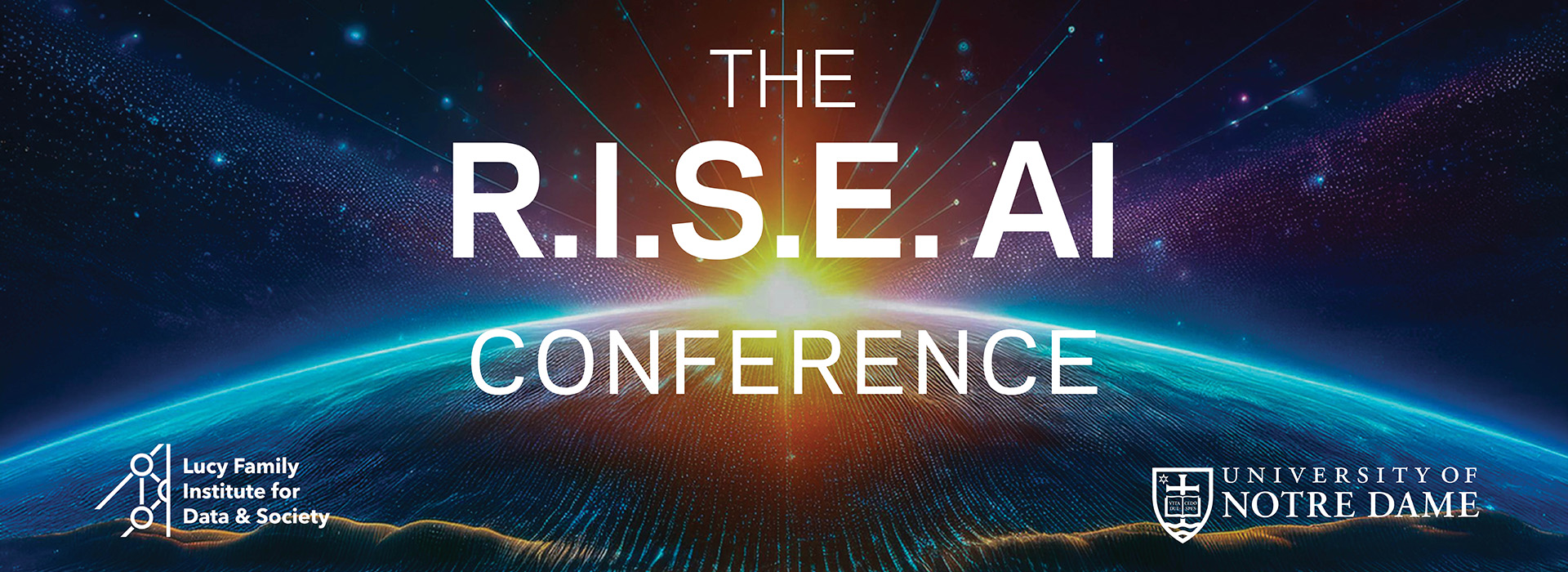
Takeaways from R.I.S.E. AI Conference

This week at the University of Notre Dame’s inaugural R.I.S.E. AI Conference in South Bend, Indiana, partner Alex W. Karasik of the Duane Morris Class Action Defense Group was a panelist at the highly anticipated session, “Challenges and Opportunities for Responsible Adoption of AI.”  The conference, which had over 300 attendees from 16 countries, produced excellent dialogues on how cutting-edge technologies can both solve and create problems, including class action litigation.

Read more at the Duane Morris Class Action Defense Blog.
© 2009- Duane Morris LLP. Duane Morris is a registered service mark of Duane Morris LLP.

The opinions expressed on this blog are those of the author and are not to be construed as legal advice.

Proudly powered by WordPress